| LatchKey.ai | Archive | About | Consulting | Forward |

Issue #16: Can Agents Have Shingles?
When the tools get cheap, the specialists get busy.
click to view full-size
“Nobody tells this to people who are beginners, I wish someone told me. All of us who do creative work, we get into it because we have good taste. But there is this gap. For the first couple years you make stuff, it’s just not that good … But your taste, the thing that got you into the game, is still killer. And your taste is why your work disappoints you. A lot of people never get past this phase, they quit … It is only by going through a volume of work that you will close that gap, and your work will be as good as your ambitions.”
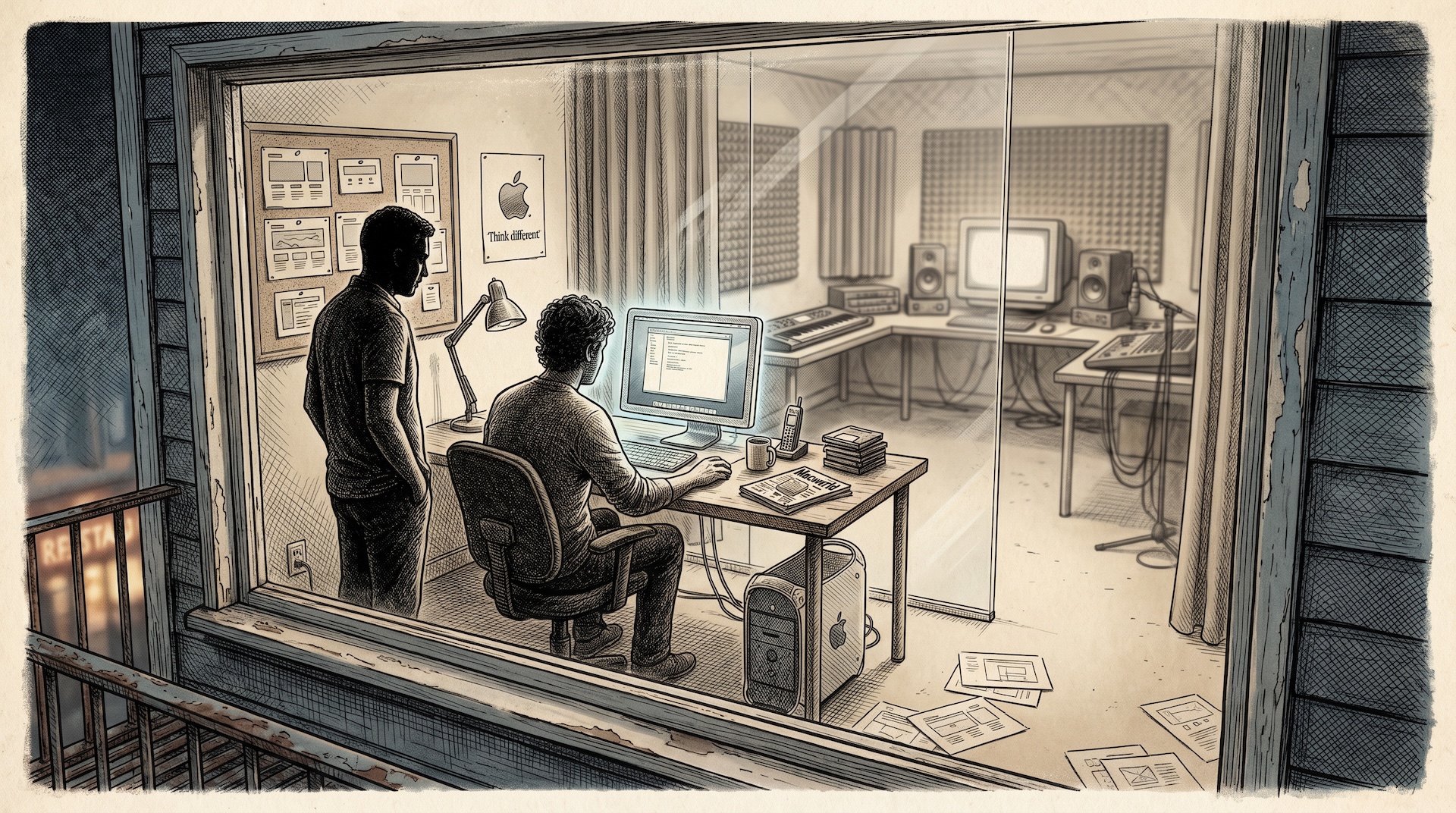
In the early 2000s I shared creative space with a great friend. Adam was a graphic designer. I was running my small recording studio. The internet was coming alive with possibilities and we figured sharing space would cross-pollinate the work — and be a blast.
We were right on both counts. But amidst the fun, something unexpected also happened that shaped our next decade.
When we started, Adam’s bread and butter — the stuff he built his business on — was custom forms, business cards, flyers, posters, catalogs, and beautiful logos. But he was always looking for ways to bring more creativity into these new tools that made it all possible. Adobe Illustrator, Photoshop, InDesign, Acrobat.
Then one day a print client mentioned they needed a website.
By the spring of 2001, the dot-com bubble had officially popped. If you were reading tech news at the time, the web was over.
But if you were a small business owner — a furniture store, an insurance broker, a local retailer — nobody told you that. You just knew everyone kept asking if you had a website, and the pressure was real.
At the same time, there were several DIY platforms making noise, like GeoCities, Tripod, and Angelfire. But putting a legitimate business profile on something that played MIDI music when you opened it, and required three separate clicks just to make it stop, was as good as flushing your professional credibility down the drain.
A thoughtfully designed website — built by someone who knew what clean could look like on the internet in 2001, custom-designed to fit the business that commissioned it like a tailored suit — could do the opposite.
It could create prestige. It could generate business.
Adam had a great eye. He had excellent taste. Clients could tell.
Another print client asked for a website. Then another. Within two years his roster was full. Within three, I’d been recruited to the team to help manage the load. Small recording projects were here and there, but over the next decade, website design grew into a flourishing business, and a source of immense creative satisfaction for Adam.
He never spent a penny on advertising.
Running entirely on excellent work, satisfied clients, and word of mouth. A boutique shop in the middle of a so-called DIY revolution that was supposed to make boutique shops obsolete.
I watched every minute of it from ten feet away.
That’s why I can recognize — it’s happening again.
The pattern isn’t new. Desktop publishing in the 1980s. Home recording in the 1990s. Desktop video after that. Each wave brought the same prediction: the specialist is done. Everyone can do it now.
Each wave delivered the same result: more specialists, more work, bigger market.
In economics, there's this thing called The Jevons Paradox. It says that when a technology makes something more efficient and much cheaper to produce, people don’t consume less of it. They end up consuming far more of it overall. And it appears to be playing out right now: NPR's Planet Money recently explored the argument that some of the first occupations showing growing demand alongside AI adoption are precisely the skilled practitioners where the tool amplifies what they already do well. The efficiency goes up. So does the appetite for the thing they make.
Democratization doesn’t cannibalize the specialist. It creates them.
And the web decade makes this hard to argue with.
From 2002 to 2010, GoDaddy grew from $24 million in revenue to $741 million. By the end of the decade, they were hosting roughly 40 million domains. The emblem of DIY — affordable, accessible, yours by morning.
During that exact same decade, the US web design services market grew from approximately $5 billion to approximately $20 billion.
Both grew. At the same time. In the same market.
By 2010, WordPress ran about 13% of the top million sites. Shopify had roughly 11,000 stores. Squarespace’s annual revenue was crossing $10 million. The same decade those self-serve tools were launching, Freelancer.com hit three million users — and web design was their largest category.
The DIY tools were supposed to make web designers obsolete. Instead, they created enough demand for websites that web designers could barely keep up.
By 2005, Macromedia had built the web’s creative nervous system. Flash ran on 98% of browsers — every interactive site, every web video, every animation that moved. Dreamweaver was the professional standard for building it all. If you were doing serious creative work on the internet, you were in their stack.
In April of that year, Adobe acquired Macromedia for $3.4 billion. Dreamweaver, Flash, Fireworks: all absorbed into Creative Suite. The CEO at the time said they were “owning the web creation toolkit.” A multi-billion-dollar bet on the people using the tools, not just the tools themselves.
And people were hiring.
Adam had the eye. So did thousands of others who came up the same way. They could look at a homepage and know — before they could articulate why — that the navigation was fighting the customer’s instincts, that the thing which looked finished was actually turning people away. That instinct didn’t come with a subscription. It came from years of reps, feedback, and being accountable when the work wasn’t right.
That gap is the entire business model. GoDaddy could give you a website builder for free. It couldn’t give you the eye to know whether you’d created competent work or a crime against graphic design.
The same gap is opening now with AI.
click to view full-size
In Issue #8, I argued that now — with AI — anyone could build their idea.
Some may have heard that as everyone will build, but those are different things.
AI has smashed the barrier to coding and moved the skills for software creation even closer to the realm of design. Access to the tools is not a constraint — anyone can reach for them.
But there are two kinds of people reaching: those who can now ‘technically’ produce… something, but aren’t quite sure whether they’ve really gotten it right. And those who recognize the greater value to them is to simply hire someone who does it well, and can deliver the thing they asked for. And it works.
The win-win is that their idea is still more attainable than ever before.
The signals are already here.
This month, Anthropic launched Managed Agents. It’s a type of hosted infrastructure that handles the technical plumbing for deploying AI-powered products. It’s the same move WordPress.com made in 2005: lower the barrier so more people can reach for the tools without needing to manage the machinery underneath. And when wordpress.com lowered that barrier, it didn’t shrink the market for web designers. It grew it. More people wanted the thing. More people needed someone to build it right. Jevons Paradox rides again.
Last year, an AI-native startup called EliseAI hit a $2.2 billion valuation. They build specialized agents to handle apartment leasing — tenant inquiries, tour scheduling, follow-up.
One vertical. One problem. Billion-dollar proof that purpose-built, specialist AI systems really are a business and not just a product feature or a side project.
That same year, a twenty-year-old property management platform serving real estate professionals, called AppFolio, launched Realm-X. It absorbed AI capability directly into their existing software. The incumbent acquiring the future. The same shape as the Adobe-Macromedia move, right on schedule.
Three bets, three angles on the same thesis: the tools are here, the infrastructure is arriving, and the market for people who can build with them well is real.
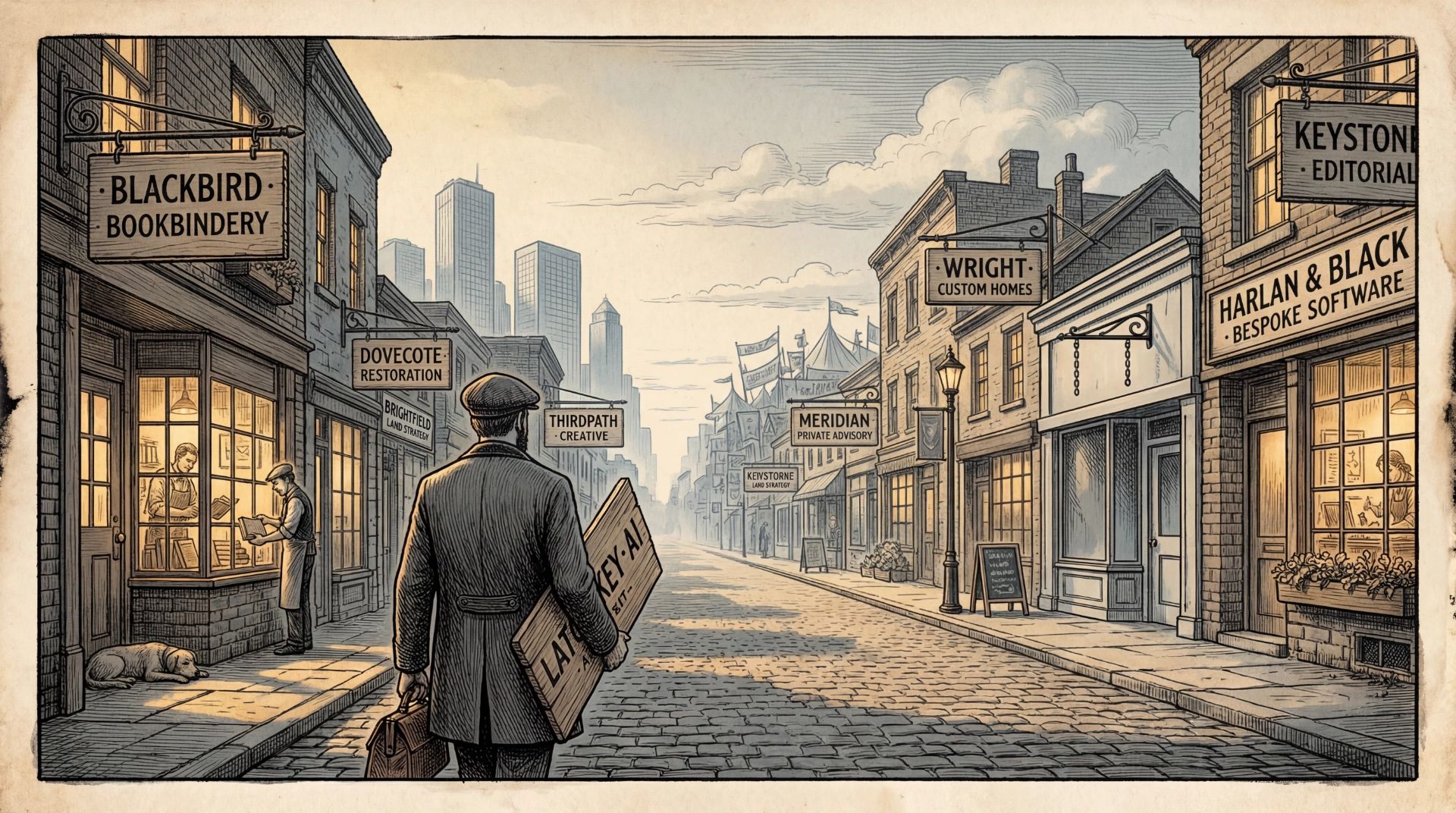
But just like the last time, between the billion-dollar big-boy plays and the off-the-shelf self-serve tools sits the Massive Missing Middle. It’s what Adam and I called the Third Path. It’s where he made his living. It’s where every web agency made theirs. And that gate is opening again. Wide.
I recognize this — because with LatchKey AI, I find myself in the front row again.
So, can agents have shingles? No, but their builders can.
Beginning with this issue, CTRL-ALT-ADAPT moves to biweekly. Not because the newsletter ran out. Because the work ran in.
Over the past few months, along with the consulting, I’ve started building custom AI solutions for clients — individuals, small businesses, professionals, anyone who knows what they need done but doesn’t want to be the person doing it. They’re busy. They want someone who already figured it out. And who genuinely loves doing it.
So far it’s a range of things. Custom-built utilities. A focused automation that kills a specific friction point. A bigger system that changes how a whole workflow runs. A custom app designed around a unique set of needs.
Every engagement starts with the same thing: discovering the exact problem the client wants solved. Figuring out what that actually is, and working out how, is largely a communication process.
There are conversations, and then there’s something that didn’t exist before.
Adam built his boutique shop riding the web design boom. Excellent work, satisfied clients, word of mouth. No ads. Jevons Paradox at full gallop.
I’m hanging my shingle at the dawn of the agent boom. Giddy-up.
The newsletter isn’t going anywhere. If anything, being in the work gives me a front-row seat to exactly what we’ve been writing about here for sixteen issues. I’ll keep bringing it back.
Every other week. Still on Fridays. See you in two.

What the Story of ATMs and Bank Tellers Reveals About the 'Rise of the Robots' and Jobs (American Enterprise Institute, 2016): The ATM was supposed to kill the bank teller. Instead, ATMs made branches cheaper to run, so banks opened more of them.
The Fundamental, Global Law of Road Congestion (City Observatory /Strong Towns, 2021): Build more highway lanes, get more traffic. A 1% increase in lane-miles produces a 1% increase in driving, globally, without exception. Jevons Paradox.
5 Questions for Architect Daniel Parolek About Missing Middle Housing (AARP, 2016): There's a term for the gap between single-family homes and high-rises — "Missing Middle Housing". Duplexes, triplexes, and bungalow courts, oh my!
A Brief History of American Homebrewing (VinePair, 2019): There were 80 commercial breweries in the US in 1978 when Jimmy Carter legalized home-brewing. By 2019 there were over 8,000 craft breweries, and Anheuser-Busch hadn't shrunk.
Maker's Schedule, Manager's Schedule (Paul Graham, 2009): Graham explains why a single meeting can blow a whole afternoon, and why people who build things need to protect time in half-day blocks.
### Try This

Find the Ira Glass taste gap in your own domain. Not with AI — with whatever you do well. What does “done right” look like to you that a newcomer with the same tools couldn’t see? Write it down in one sentence.

That’s not a liability in the AI era. That’s the thing worth hiring.
Quote to Steal:
“There are conversations, and then there’s something that didn’t exist before.”
Thanks for reading,
-Ep
Miss any past issues? Find them here: CTRL-ALT-ADAPT Archive
Know someone whose instincts keep telling them they’re about to be obsolete? Forward this. The specialists aren’t going anywhere.
Did this newsletter find you? If you liked what you read and want to join the conversation, CTRL-ALT-ADAPT is a weekly newsletter for experienced professionals navigating AI without the hype. Subscribe here —>latchkey.ai