| LatchKey.ai | Archive | About | Consulting | Forward |

Issue #10: The Gen X Paradox
Your experience is the asset. Your experience is the barrier. Both are true.
click to view full-size
The thing holding most people my age back from getting the best they can out of AI isn't fear. It's not ignorance, and it's not age. Those are just the low-hanging fruit of breathless think pieces that induce anxiety more than they offer clarity. No, what’s holding them back is something much deeper and more intricate.
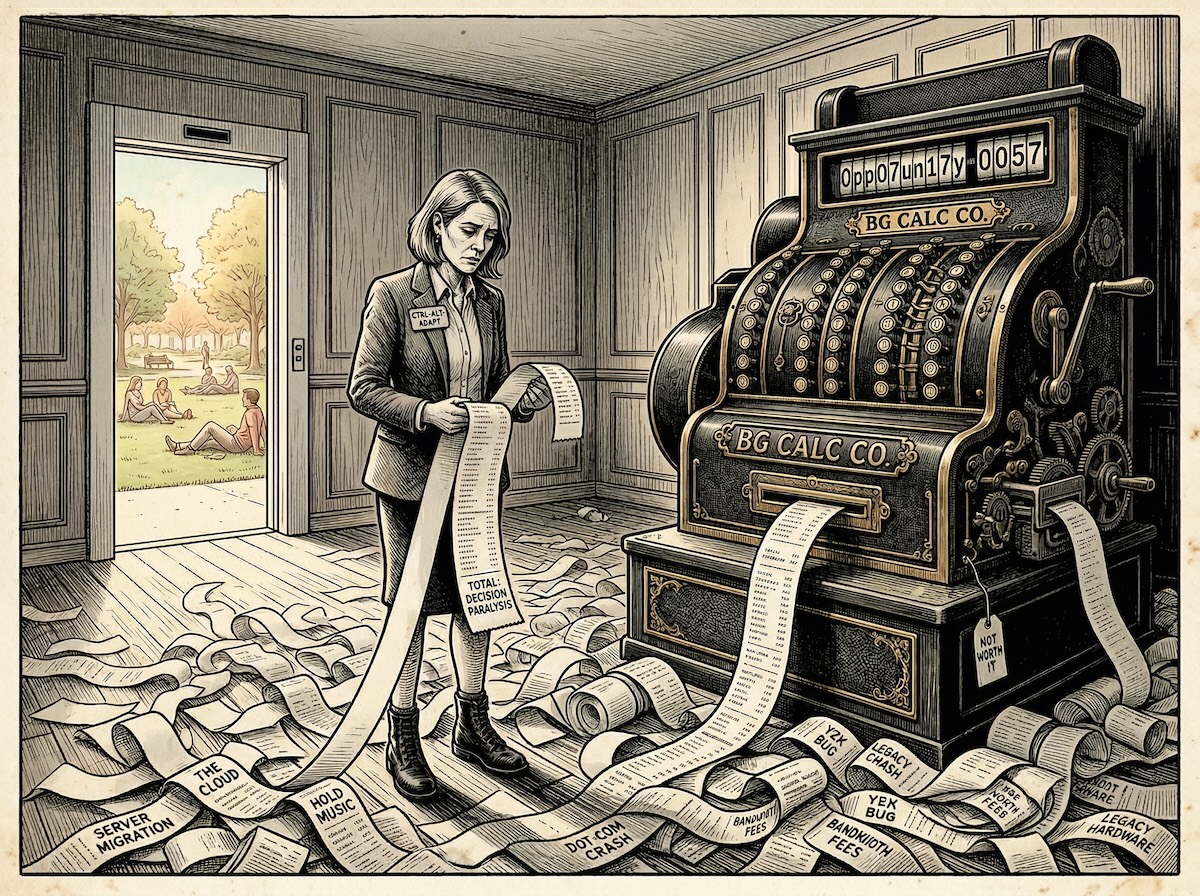
It's a calculator.
Not a real one. It’s a little subroutine humming away in the background of your mind. And it's always been there, processing and pricing every thought you have about ‘trying something new’.
It's an involuntary cost-estimation reflex trained on three-plus decades of figuring things out the hard way. Someone says "you know you could build that if you want" and before you even finish processing the sentence, the calculator has already returned a number.
Too much. Too long. Not worth it. Next.
And the thing is, it's not wrong. The calculator is running on real data. Every estimate it spits out is rooted in actual experience. The real hours burned, money spent, and frustration absorbed from everything in the world you've ever endeavored. The reflexes are earned.
The problem is — that world isn't this world anymore. And your Background Calculator is running on expired data.
The Invoice
You know the feeling. Someone mentions turning ‘that idea’ into a side project. Or some newsletter dude suggests automating the thing you've been complaining about for years. But before the thought has reached conscious consideration, your brain has already pulled up the invoice:
Building a website: 🤑 Months. Thousands of dollars. You'd probably need a developer.
Learning new software: 🤑 That full-body dread you feel from years of onboarding tutorials, new keyboard shortcuts, and menu systems you never asked for. “Ugh! Another new program to learn?” It's like learning to walk again every time.
Platform migrations: 🤑 The forced march from the thing you'd finally mastered to the thing they swore would be better. It wasn't. But the license was already paid for.
And phone calls: 🤑 There will be phone calls. Many will involve distorted hold music for long stretches between tortured unsatisfying answers.
Every one of those prices was accurate. That's what makes the Background Calculator so persuasive. It's not guessing, it's referencing real scar tissue.
But the calculator doesn't stop there. Through decades of experience, it learned that new technology arrives with hidden costs, mandatory retraining, and frequently… betrayal.
The dot-com promises that evaporated inside your 401K. The "paperless office" we're still waiting for. System migrations that nuked your muscle memory. "The cloud will change everything" — which just meant we now rent what we used to own.
So the calculator adds a surcharge. A cynicism tax prorated by how many prior claims turned out to be total garbage.
And for some, there's a darker line item. Their most vivid AI experience was a negative one: a boss who didn't understand it while making impossible demands for its use, a company that used it to justify unrelated cuts, a job lost to someone younger who "knew AI". For them, the Background Calculator isn't running a cost estimate. It's running a threat assessment.
So when you hear "AI will change everything for you!", the calculator fires and you flinch.
That's not weakness. That's wisdom — running on expired data.
The Paradox
But here is the real rub.
The same 30+ years of experience feeding the Background Calculator its flinch are the exact same years and experience that built the judgment, taste, and specification skills that AI rewards most.
Sit with that for a second.
A 28-year-old digital native has fewer reference prices in their calculator. Smaller flinch. Jumps right in. But, shallower material to work with. Fewer negotiations scoped, fewer briefs written, fewer decades of knowing what "done" looks like before starting.
A 52-year-old Gen Xer has the deepest specification database in the room. Thirty years of learning what good looks like, how to scope a project, how to describe what you want, to the person you need to build it.
But their Background Calculator is also running on the deepest cost database in the room. Every painful migration. Every broken promise. All active reference prices generating doubt and hesitation.
The digital native will step through the door easily, but they bring less experience to the conversation.
The Gen Xer will bring deep experience to the conversation, but can't step through the door for fear of the cost.
And conversation is the new code.
That resistance you feel is your receipt for the experience that makes you valuable. But the gulf between the reflex and reality is what you don’t know you don’t know. Your Background Calculator’s blind spot.
So how do we recalibrate the Background Calculator? It’s not with words. The calculator doesn't accept verbal input. You can't update it by just reading that the costs have changed or listening to someone at a conference explain what's different now.
It only updates through experience. The moment you ask the tool to do something your whole body assumes will take three hours, and it comes back in four minutes, you feel the recalibration happen in real time. I believe the scientific term for this is "wait…what?"
That's the update path, folks. Not through an intellectual acknowledgement. You need the visceral impact you can only get from doing.

The Year the Frontier Firm Is Born (Microsoft Work Trend Index, 2025): Microsoft tracked 300k of its employees using AI tools and found initial excitement peaked at week three and then usage dropped. Why?
The Great Aha (Peter Tertzakian, Energyphile): In 1905, a stagecoach operator named Ed Tucker had 30 years of horse-based data proving automobiles could never compete.
The AI Revolution Looks Like Homework (Stephen Fitzpatrick, Substack): A veteran teacher watches his sixth-grade daughter complete an essay with school-provided AI tools. He was surprised by his takeaway.
Memory: The Key to Chess? (Nate Solon, Zwischenzug): Chess grandmasters reconstruct board positions almost perfectly from brief exposure, but scramble the pieces randomly, and their advantage vanishes.
click to view full-size
Two Ways to Be Wrong
There are two main ways to be wrong about AI right now. You likely know people in both camps. Maybe you're in one yourself.
The "I tried it last year. Meh." camp. These folks poked at ChatGPT last spring. It gave them something generic, or confidently wrong, or weirdly enthusiastic in a way that made them trust everything else less. They closed the tab. The calculator filed the result. Over-hyped. Not for me.
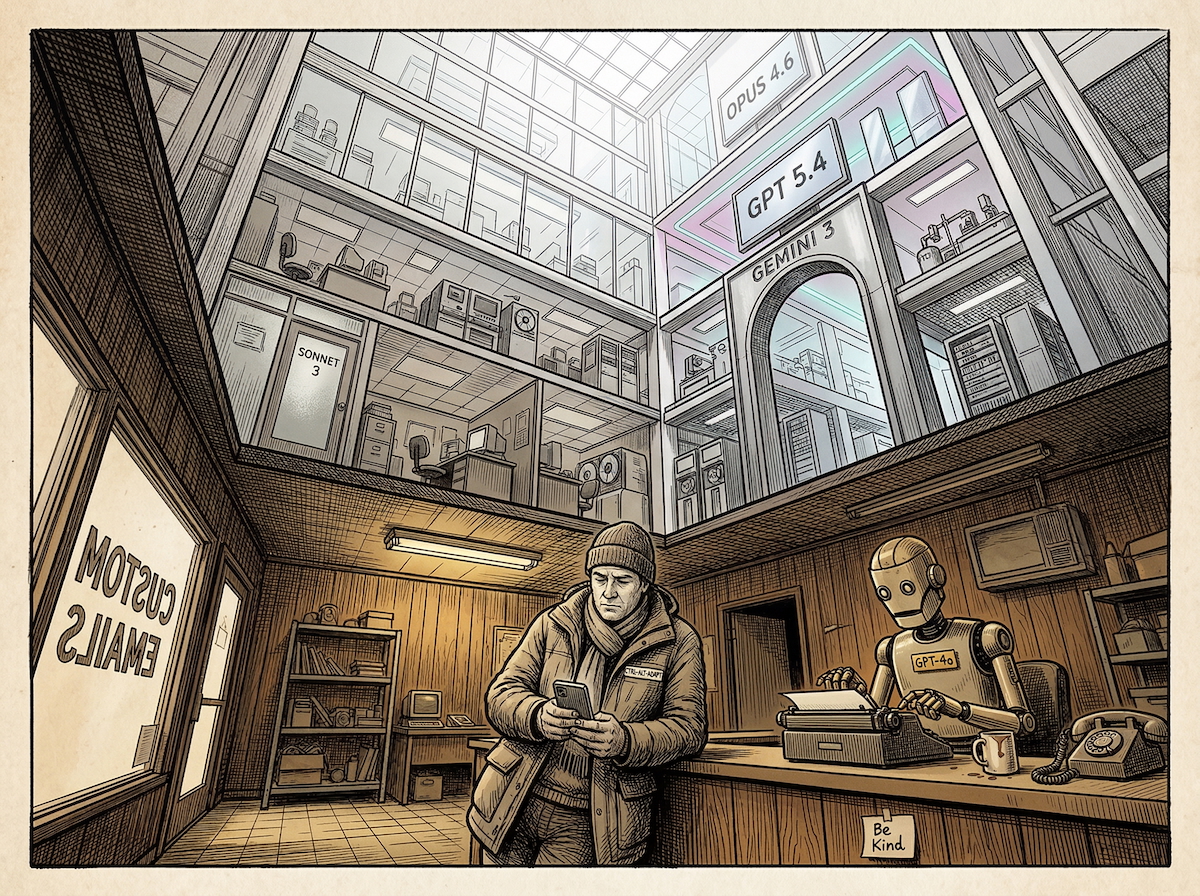
Here's what they don't know: the model they tested has been retired. Not updated — retired. Between last August and yesterday, ChatGPT alone went from GPT-4o through GPT-5 to GPT-5.3. Claude went from Sonnet 3.5 to Opus 4.6. Those aren't software updates. Those are completely different products with the same surname.
The "I use it for some things. I'm good." camp. They've got a routine. Draft emails. Summarize articles. Maybe a funny image. Maybe some conversational ideation. They've developed a comfort level and figure, "I get it."
They don’t. Not anymore. The gap between what they're doing and what AI can now do has widened so dramatically that their confident fluency has quietly become a hard ceiling. They're not behind because they don't use AI. They're behind because they use it within the boundaries of understanding they derived from a version that no longer exists.
Both camps. Same stale calculator. Both need a reset.
What Actually Changed
Here's why a reset is easier than you think: unlike every other software you've cursed at through the years, this one doesn't demand you learn its language to use it. It arrived speaking yours.
But simply saying "AI got better" is exactly the kind of vague promise your Background Calculator was built to dismiss. So let me be specific about what happened since last October. And I will stay strictly in the tools you all report using.
It's not a chatbot anymore. Now you describe a multi-step project, the AI plans it, executes it, comes back with finished work. One platform reads, edits, and creates files on your actual computer. Another browses the web and books appointments on your behalf.
It remembers you. Across conversations, days, and weeks. The "re-explain yourself every single time" tax has been abolished. If you're still starting every conversation from scratch, you're pedaling a motorcycle.
It can teach you how to use it. This is the part your Background Calculator genuinely cannot process, because it's new. You can tell it you don't know what to ask for, and it will help you figure it out. Describe a problem without knowing the solution, and it walks you through options in plain language. We never read manuals, but now you don’t have to feel bad about it. It is its own manual.
The rugged AI terrain of 2025 has been paved. The prompt engineering tricks from six months ago? Unlearn them. The only real barrier left is knowing what you want and how to ask for it.
And these tools arrived fast. In early February of this year, while Wall Street's own Background Calculator was still filing the last quarterly earnings, AI products landed that could do what entire software companies charge monthly subscriptions for — at a fraction of the cost. In six weeks, nearly two trillion dollars in software market value evaporated. They're calling it the SaaSpocalypse. Not because the software stopped working — because the cost assumptions expired. Sound familiar?
Where That Leaves You
I understand that not everyone reading this is in the same place, and pretending otherwise doesn't help anyone.
If you’re still talking to ChatGPT the way you did at Thanksgiving, you’re using a different product now without realizing it. The free version alone is meaningfully better than what you remember. Start there with something real. Not a recipe. Something you actually need help thinking through.
If you're on the free tier and think “that's AI" — the difference between free and a $20/month subscription isn't a premium version of the same thing. It's a different capability class entirely.
If you use AI daily but mainly for drafting text, you've found the lobby. The building has floors you haven't visited.
Wherever you are, the skill that matters most hasn’t changed: knowing what you want before you begin. Even if what you want is to figure out what you want, the approach is the same. The problem. The audience. The constraints. What "done" looks like. That's not a tech skill. That's specification. And your Background Calculator has been training that muscle for thirty years.
Here is a simple AI roadmap chart I put together to give you a jumping off point. Note that the chart doesn't point to one tool. Once you understand the job you are hiring for, you know what strengths to look for in your applicants. Like I said, same skills you've been using for decades.

The LatchKey Takeaway:
The thing holding Gen X back from AI isn't fear, ignorance, or age. It's an involuntary cost-estimation system — trained on real experience, reinforced by real betrayals — that fires before the conscious mind finishes the thought.
The paradox: the same experience feeding the flinch is the exact skillset AI rewards most. The judgment. The taste. The ability to know what "done" looks like before you start — that's the input AI needs and cannot generate on its own.
The resistance is the receipt. The reflexes are earned. They're just running on expired data.
©2026 latchkey.ai
## 🧭 Try This: Run a Price Check

Pick something you finished this week. A report, a comparison, a plan, a long email thread — something you remember the actual cost of. Maybe it was two hours. Maybe half a day.

Now open your AI. ChatGPT, Claude, Gemini, whatever you've got. Describe that same task — not the output you created, but the assignment itself. The goal, the audience, the constraints, what "done" looked like. Give it the same brief you were working from.

Time the response.

When it comes back in ninety seconds with something that's 80% of the way there, pay attention to what happens in the back of your mind. That's your Background Calculator receiving a price update from a world it didn't know existed.

You're not replacing what you did. You're re-pricing what it costs. That's the recalibration.
Quote to Steal:
"The resistance you feel is the receipt for the experience that makes you valuable."
Thanks for reading,
-Ep
Miss any past issues? Find them here: CTRL-ALT-ADAPT Archive
Know someone whose Background Calculator is running hot? Forward this. Sometimes all it takes is someone naming the thing.
Did this newsletter find you? If you liked what you read and want to join the conversation, CTRL-ALT-ADAPT is a weekly newsletter for the analog-to-digital bridge generation navigating AI without the hype. —>latchkey.ai